Is the Harrods 2026 Candle Collection Worth the Hype? An Honest Review.
There is a specific kind of magic reserved for the green awnings of Knightsbridge. As a candle maker and the founder of That Candle Company, I recently conducted a Harrods 2026 candles review. Specifically, I stepped into the store with high expectations for their new Home Fragrance collection. I was searching for the “pinnacle”, the olfactory art that justifies a three-figure price tag and sets global trends.
However, as I moved through the marble halls of the Fragrance Parlour, the magic began to fade.
While the vessels were undeniably heavy, the scents themselves felt… quiet. In an era where “luxury” is often a synonym for “expensive,” this range felt like a masterclass in safe, corporate perfumery. Consequently, for a discerning nose, many house blends lacked the complex silage and layered evolution that define a premium candle. It was a stark reminder that in 2026, the world’s most famous department store might give you the status, but they don’t always give you the soul.
The Innovation Gap: Why Harrods 2026 Candles Ran with the Herd.
Harrods has the prestige to be the world’s greatest patron of olfactory art. Therefore, I expected them to push the envelope. I wanted them to challenge our senses with rare resins or boundary-pushing scent structures. Instead, I found that the Harrods 2026 candles were content to simply run with the herd.
In a year where luxury should be defined by “The Brave and The Bespoke,” this collection played it safe for the masses. Moreover, when a brand this influential chooses “marketable” over “remarkable,” the industry loses its edge.
True luxury shouldn’t follow trends, it should create them. Furthermore, at That Candle Company, we don’t design for the “average” customer. We design for the individual who is tired of the same fragrance families found in every airport lounge. Consequently, we believe that if you aren’t pushing the envelope, you’re just making wax, not art.
Why “Mass-Luxury” is Falling Flat in 2026.
To understand why the Harrods 2026 candles felt underwhelming, we must look at the “Artisan vs. Corporate” divide. Specifically, here are the three areas where the “Giant” fell short of the “Maker”:
1. The “Linear” Scent Profile: One-Note Wonders.
Many new releases, like the Soliflor range, rely on high-impact top notes. These smell great on the shelf but disappear within twenty minutes of lighting. In contrast, true luxury requires a pyramidal structure, a top, heart, and base that evolve as the candle burns.
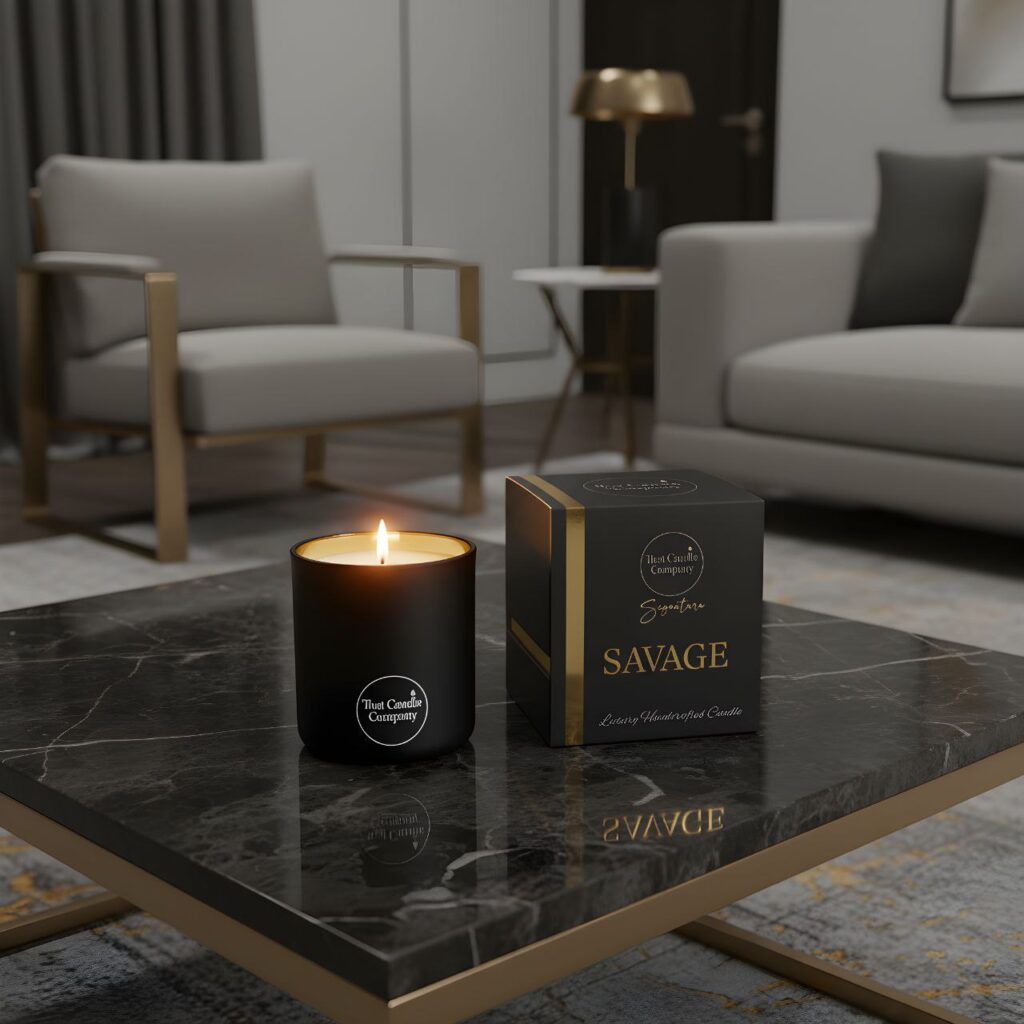
Additionally, at That Candle Company, we focus on the dry down. We ensure base notes like Rosewood or Tonkabean linger long after the flame is extinguished.
2. The Wax Integrity: Shelf-Life vs. Burn-Quality
Recently, I noticed “sweating” on several display models. This is a common sign of paraffin-heavy blends or poor oil-to-wax emulsification. While you pay for the Harrods name, you should receive a clean-burning, sustainable wax pool. Unfortunately, these candles prioritised a long shelf-life over a superior burn experience.
3. Branding Over Botanical Depth: The Safe Bet.
2026 is the year of “Mineral” and “Savoury Gourmand” scents. While Harrods touched on these, they felt like “safe” versions of bolder niche concepts. Ultimately, they were designed not to offend, rather than to deeply move the customer.
A Closer Look: The Harrods 2026 Candle Collection.
In addition to the scent, we must inspect the physical product. Specifically, the presentation is quintessential Knightsbridge, but the wax density suggests mass-appeal over artisanal depth.
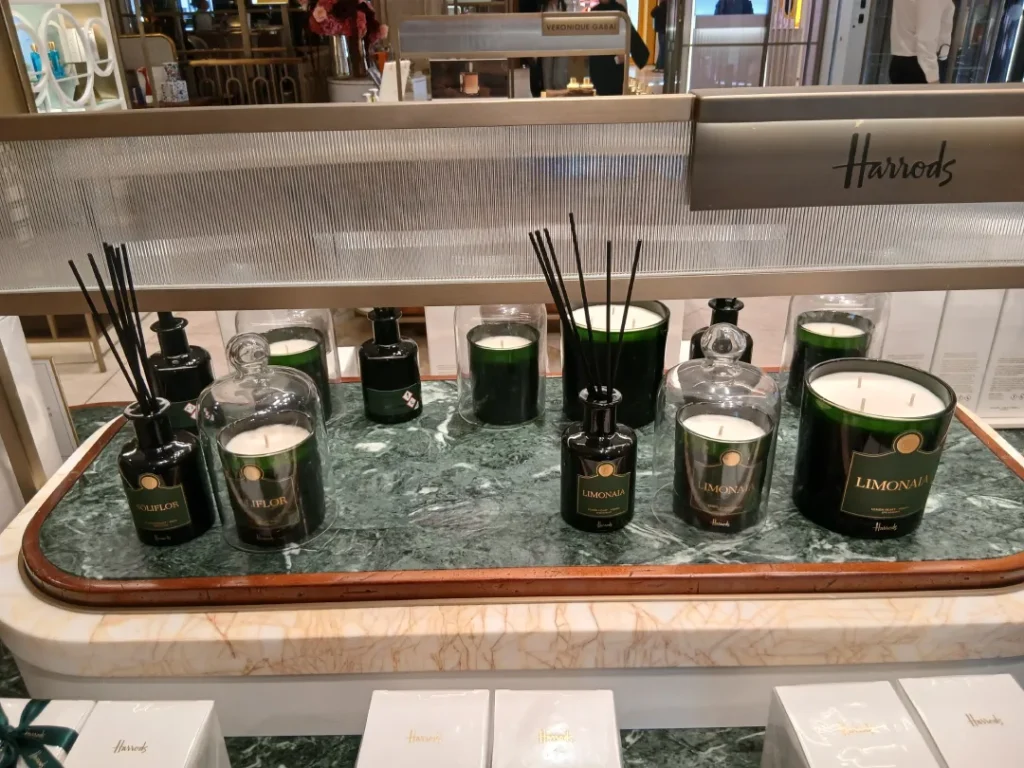
This photo illustrates the Harrods approach perfectly. The marble display is stunning, but the products tell a different story:
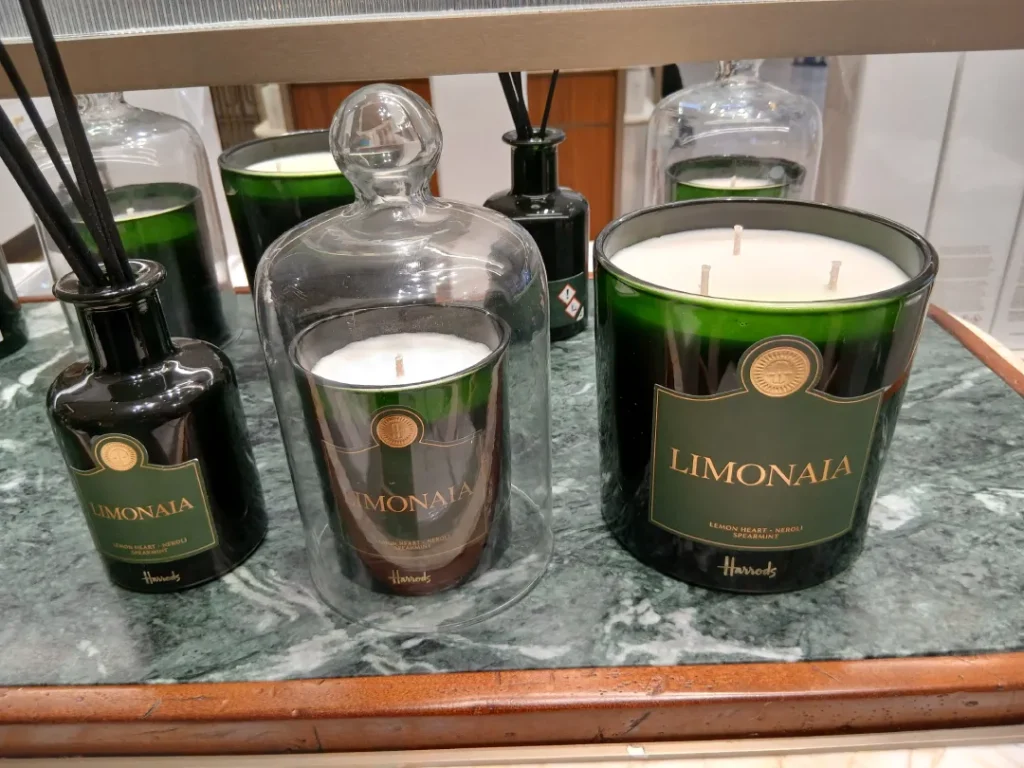
- The Vessel: Although the dark green glass looks classic, it feels commercial. True luxury in 2026 is moving towards matte, textured, or bespoke materials.
- The Wax: The uniform, stark white appearance often indicates high paraffin. As a result, this prioritizes a consistent look over a clean, natural burn.
- The Cloches: These elegant glass covers trap scent. Consequently, they often compensate for a weaker “cold throw” that a potent candle wouldn’t need to hide.
The Artisan’s Standard: What Luxury Should Smell Like.
At That Candle Company, we design for the olfactory enthusiast. Indeed, we believe a candle should be a journey. If you were underwhelmed by corporate profiles, here is how we do things differently this year, using our signature double-wick luxury scented candles:
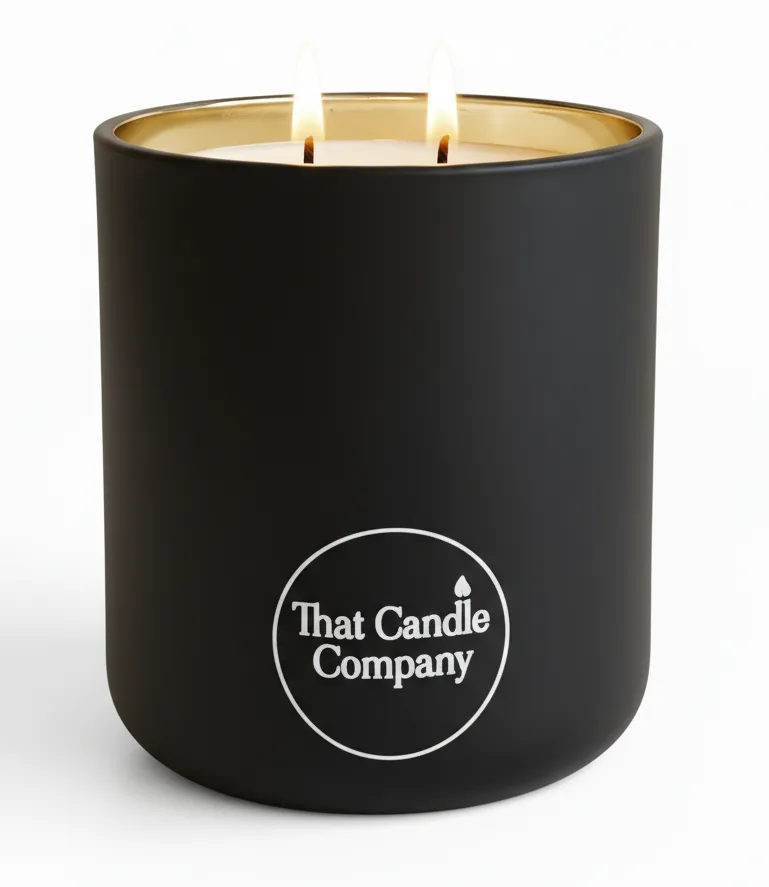
- The “Freshly Cut Blooms” Trend: Whereas Harrods’ “Soliflor” scents had hardly any cold throw aroma, our Spanish Nights uses genuine floral notes with a strong cold throw aroma.
- “Architectural” Vanilla: Similarly, while their gourmands were sugary, we layer Sheer Vanilla with Buttery Balsamic, Himalayan Salt Caramel and Sandalwood with Tonka bean for a “grown-up” profile.
The Verdict: Is 2026 the Year of the Logo or the Maker?
My trip to Harrods reminded me that luxury is a feeling, not just a price tag. While the green bag is iconic, true luxury is the atmosphere you create at home. Therefore, if you want a scent that lingers and a profile that is truly unique, I invite you to explore That Candle Company’s online shop.
However, the trip wasn’t a total disappointment. Among the “safe” scents, I discovered one heritage brand doing things right. Specifically, they are bottling history with a wax formula that puts corporate giants to shame. In fact, I found the BEST luxury scented candle for 2026, and it wasn’t a Harrods house brand.
It is a scent so complex and powerful it changed my perspective on “Signature Scents.”
I’ll reveal this heritage masterpiece, and its 400-year-old secret, in my next post: The Gold Standard: My Deep Dive into the King of Luxury Candles.