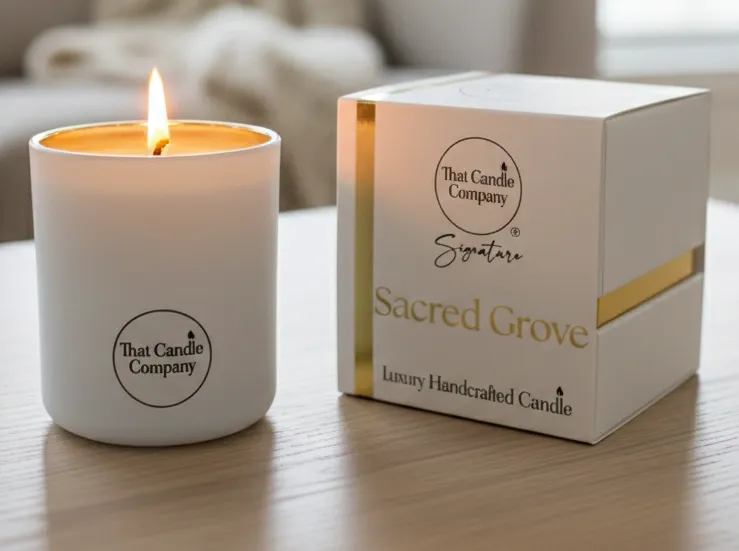
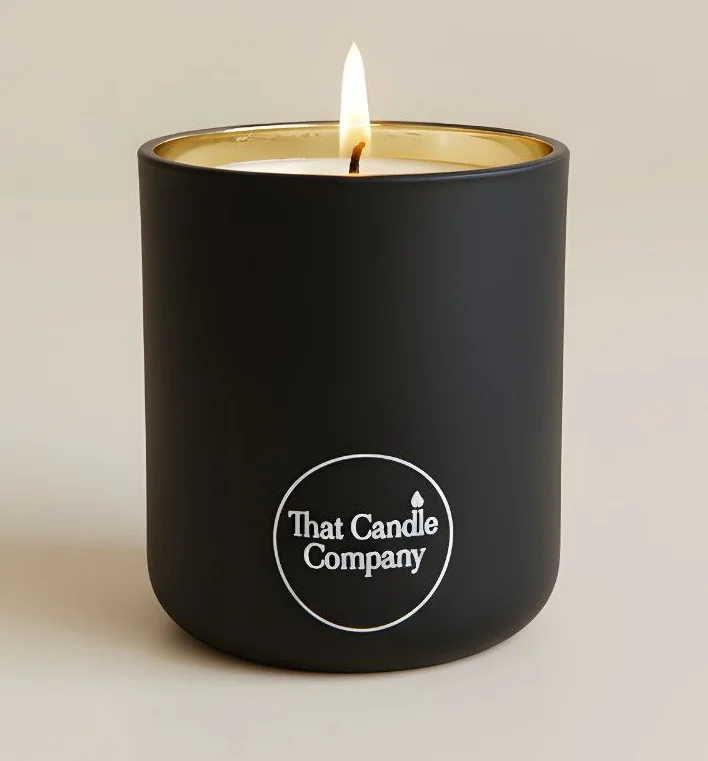
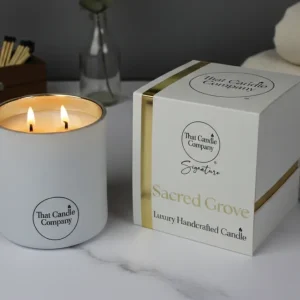
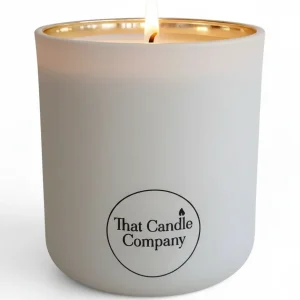
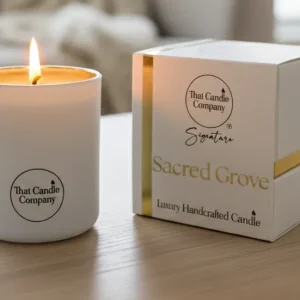
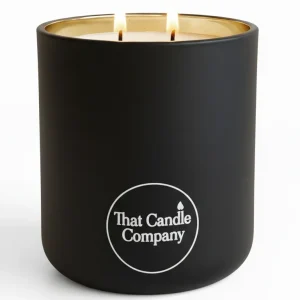
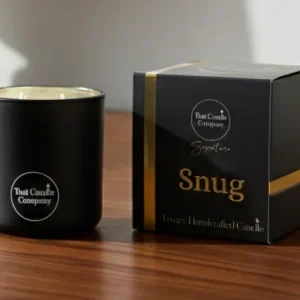
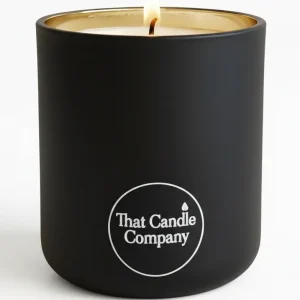
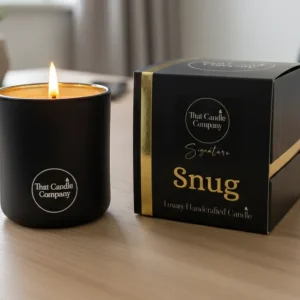
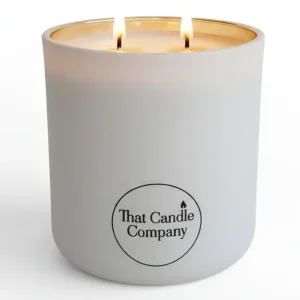
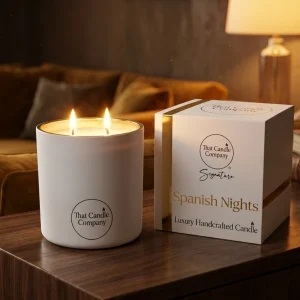
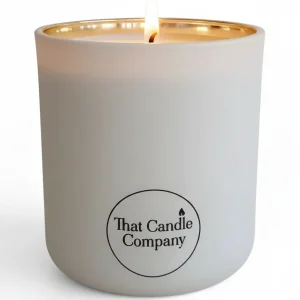
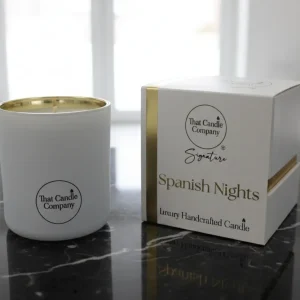
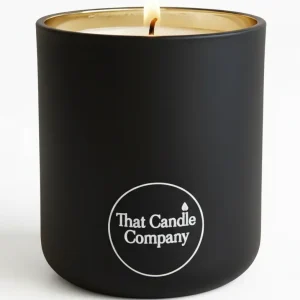
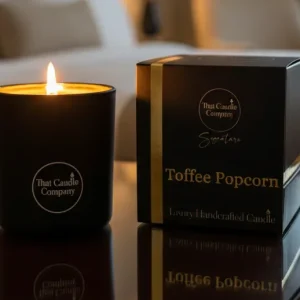
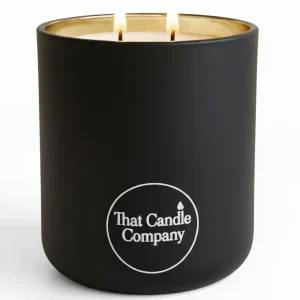
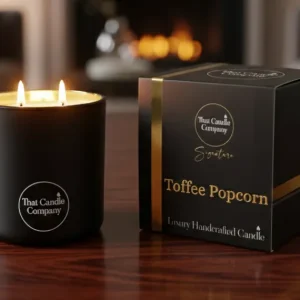
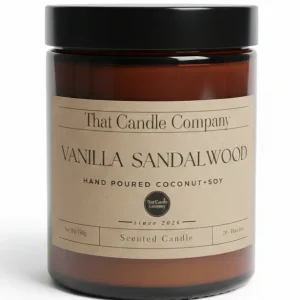
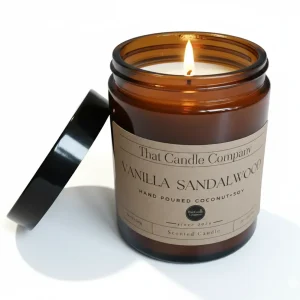
An Artisan Candle Story: Passion for Clean, Non-Toxic Luxury.
“Our artisan candle story began with a simple disappointment that sparked a passion. After purchasing what was meant to be a luxury candle, it quickly became clear that the materials and craftsmanship were far from premium. The off-centre wick, poor-quality wax, and faint fragrance inspired a decision to create something better.
Driven by creativity and curiosity, we began exploring the art of candle making, carefully perfecting each stage to produce a true luxury scented candle. When we shared these candles with friends and family, their enthusiastic feedback encouraged us to take the next step.
From that moment, our artisan candle story became one of dedication, craftsmanship, and a love for quality. That journey led to the creation of That Candle Company , where every candle reflects the care, passion, and purpose that started it all.”
Luxury Candle Materials
Key Materials in Our Artisan Candle Story.
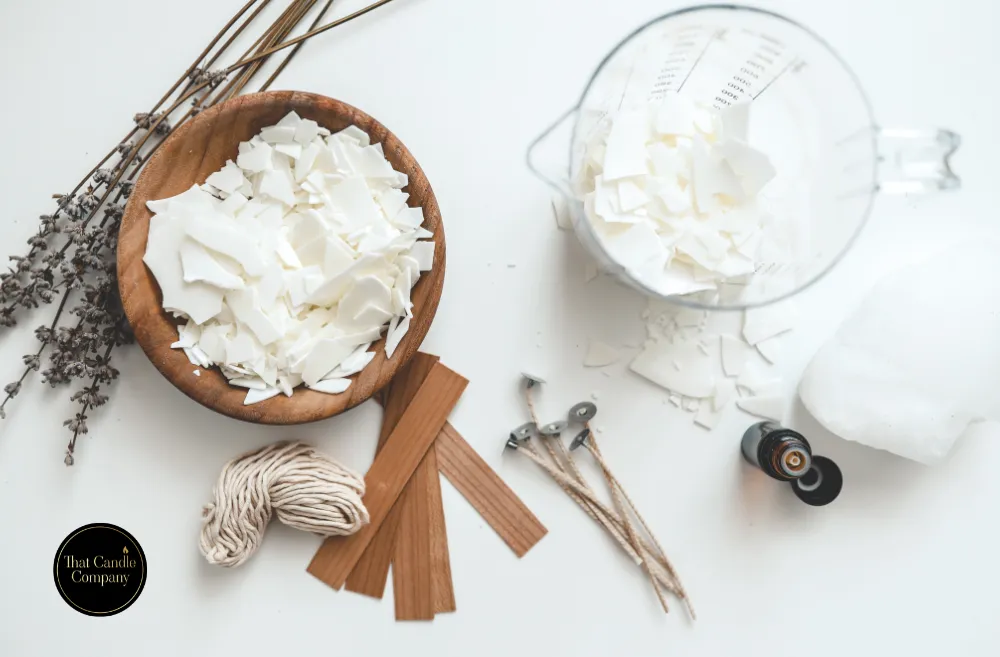
As part of our artisan candle story. The core materials for making a luxury scented candle focus on quality, purity, and performance. These are the essentials:
Wax Base
Soy wax – clean-burning, natural, and holds fragrance well.
Coconut wax – creamy texture, excellent scent throw, and sustainable.
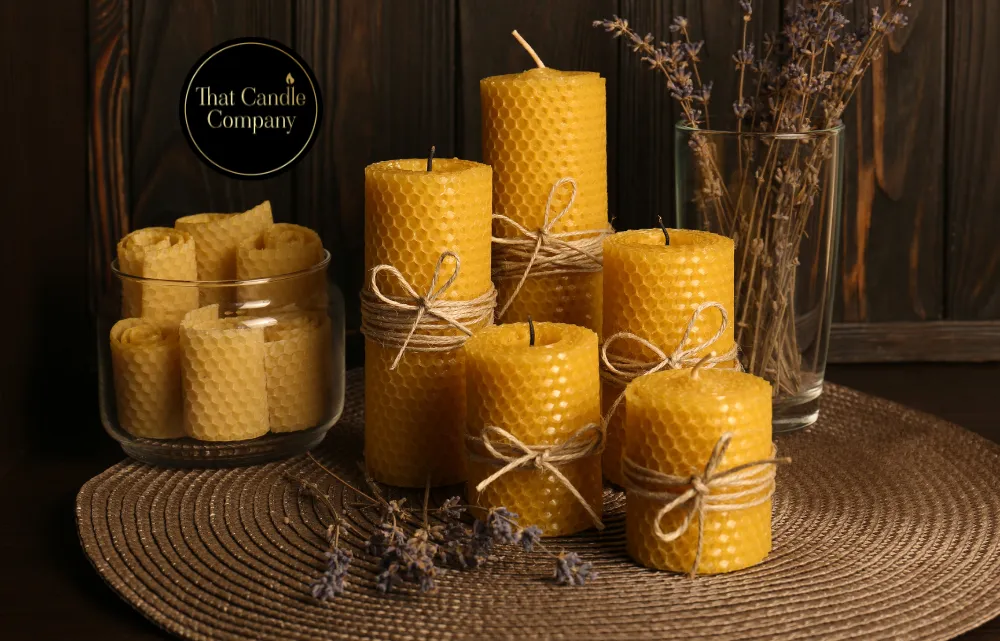
Beeswax – natural, long-burning, and gives a subtle honey aroma.
Blended waxes – In our artisan candle story, we use specific soy-coconut blends for optimal burn performance.
Fragrance Oils or Essential Oils
Fragrance oils – designed for candles, offering strong and consistent scent throw.
Essential oils – natural and pure, ideal for a botanical aroma.
Luxury candles often use custom blends for signature scents.
Wicks
Cotton wicks – lead-free, clean-burning, and ideal for most waxes.
Wooden wicks – create a soft crackling sound and modern aesthetic.
Vessels
Glass jars, ceramic pots, or metal tins chosen for heat resistance.
Additives (optional. We don’t use these in our candles)
Candle dye – for color, though many luxury candles remain neutral.
Stearic acid – often used in candle making to improve hardness and scent throw.
A luxury candle’s quality comes from the balance of premium ingredients, precise formulation, and refined presentation.
Types Of Wax
There are several main types of candle wax, each with distinct characteristics, sources, and production regions. Below is a breakdown of the most common types, their origins, and their safety profiles.
1. Paraffin Wax
Source: Derived from petroleum (a by product of crude oil refining).
Main Production Areas: United States, China, and parts of Europe with large petrochemical industries.
Toxicity: Considered the most controversial. When burned, paraffin can release potentially harmful chemicals such as toluene and benzene, which are known carcinogens. It’s not considered eco-friendly or non-toxic.
2. Soy Wax
Source: Made from hydrogenated soybean oil.
Main Production Areas: United States, Brazil, Argentina, and China — major soybean producers.
Toxicity: Non-toxic and biodegradable. Considered one of the cleanest-burning waxes when made from pure soy without additives.
3. Beeswax
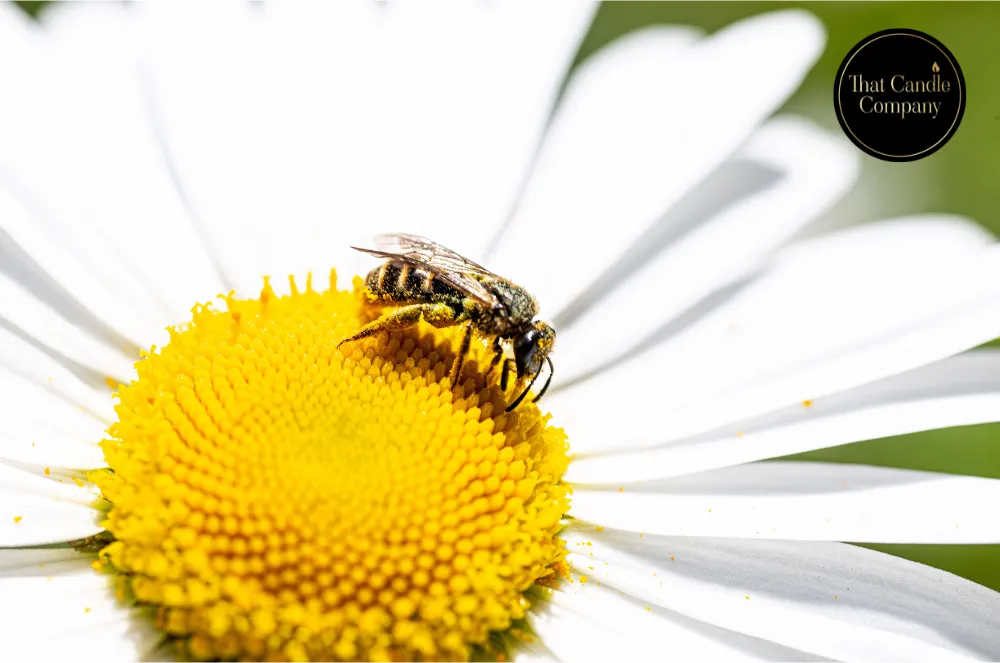
Source: Produced naturally by honeybees.
Main Production Areas: China, Turkey, Ethiopia, and the United States.
Toxicity: Completely natural and non-toxic. It even helps purify the air by releasing negative ions when burned.
Luxury Scented Candles From That Candle Company
4. Coconut Wax
Source: Extracted from the meat of coconuts and often blended with other natural waxes.
Main Production Areas: Philippines, Indonesia, India, and Sri Lanka.
Toxicity: Non-toxic and sustainable when sourced responsibly. Burns cleanly with minimal soot.
5. Palm Wax
Source: Derived from palm oil.
Main Production Areas: Indonesia and Malaysia (the largest palm oil producers).
Toxicity: Non-toxic in itself, but environmental concerns arise from deforestation and habitat destruction linked to palm oil production.
6. Rapeseed (Canola) Wax
Source: Made from hydrogenated rapeseed oil.
Main Production Areas: United Kingdom, Germany, France, and Canada.
Toxicity: Non-toxic and sustainable, especially when locally sourced. It’s gaining popularity in Europe as an eco-friendly alternative.
7. Gel Wax
Source: A blend of mineral oil and polymer resin.
Main Production Areas: United States and China.
Toxicity: Technically non-toxic, but because it’s petroleum-based, it can emit small amounts of soot and is less eco-friendly than plant-based waxes.
Summary of Toxicity
Potentially Toxic: Paraffin (due to petroleum origin and chemical emissions).
Generally Non-Toxic: Soy, beeswax, coconut, palm, and rapeseed waxes.
Moderately Safe but Less Eco-Friendly: Gel wax (synthetic origin).
For luxury, eco-conscious candle brands, soy, coconut, beeswax, and rapeseed wax are the most popular choices due to their clean burn, sustainability, and non-toxic nature.
Behind the Glow: Our Intensive Luxury Candle Testing Process
At the heart of every Luxury Scented Candle we produce is a rigorous, multi-stage testing process. We believe that true luxury isn’t just about a beautiful jar, it’s about the science, precision, and craftsmanship that goes into every flicker.
From the initial sourcing to the final inspection, here is how we ensure your candle delivers an unparalleled sensory experience.
1. Sourcing the Perfect Vessel.
Our journey begins with the selection of our glassware and jars. We don’t just look for aesthetic appeal, we source vessels that meet the highest durability and safety standards. Each jar is a foundation, and we ensure it can withstand the heat while looking elegant in your home.
2. The Science of the Scent: Hot vs. Cold Throw.
A high-quality candle should delight your senses whether it is lit or unlit. We meticulously test our wax blends and fragrance ratios to achieve the perfect balance:
The Cold Throw: This is the fragrance released when the candle is unlit. We ensure our candles “fill the room” even before you strike a match.
The Hot Throw: This is the fragrance performance during the burn. We fine-tune our formulas so the scent remains consistent, powerful, and evocative throughout the entire life of the candle.
3. Wax Integrity and Aesthetics.
Texture matters. We test our wax and fragrance combinations to ensure they bond perfectly. Our goal is to prevent “shrinkage” (where the wax pulls away from the glass) and to ensure a smooth, flawless finish once the wax has set. If it doesn’t look perfect, it doesn’t leave our studio.
4. Precision Wick Testing.
The wick is the engine of the candle. Choosing the wrong size can lead to “tunnelling” or a flame that burns too hot. Our intensive testing involves:
The 4-Hour Melt Pool Test: We ensure the wax melts evenly to the edge of the jar within the first four hours.
Temperature Control: We select wicks that burn at the optimum temperature to prevent soot and ensure a clean, long-lasting burn.
5. Fragrance Artistry.
Fragrance is a powerful tool for wellness. We focus on scents that evoke specific emotions, whether you are looking to reduce stress, encourage relaxation, or bring a sense of calmness and joy to your space. By using premium ingredients, we create an atmosphere, not just a scent.
“Our Quality Guarantee: Every single candle is individually inspected before it reaches your door. Your satisfaction and the quality of our craft are our utmost priorities.”.
Finally, keep informed of our latest products and special offers. Of course, we won’t spam you. When you sign up we will send you a code for 15% OFF your first purchase of a full size candle.