Are Candles Safe for Dogs and Cats? A Complete UK Guide for Pet Owners.
Are candles safe for dogs and cats? It’s a question more UK pet owners are asking as scented candles become a staple in modern homes.
With over half of UK households owning a dog or cat, many people now pay closer attention to the ingredients they bring indoors. In particular, home fragrance has come under greater scrutiny.
At That Candle Company, a Wiltshire-based luxury candle brand, we regularly speak to customers who want reassurance. After all, pet owners don’t want to choose between a beautifully scented home and their animal’s wellbeing.
Why Are Candles Potentially More Sensitive for Dogs and Cats?
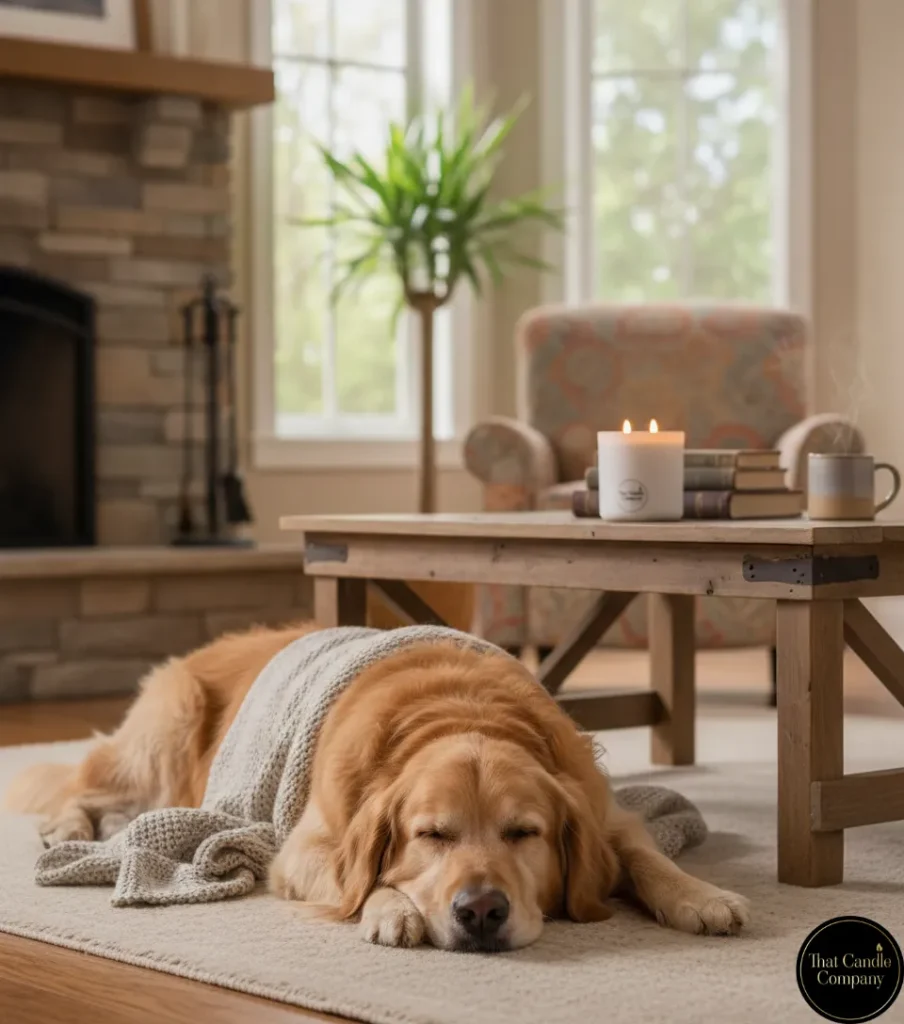
Dogs and cats can be more sensitive to airborne irritants than humans. For example, cats metabolise certain compounds differently, which may make them more reactive to strong scents.
In addition, pets are smaller than we are. As a result, concentrated indoor air can affect them more quickly.
That said, occasional candle use in a well-ventilated room is unlikely to cause problems for most healthy animals. However, ingredient quality and burn habits still matter.
What Ingredients Matter When Considering if Candles Are Safe for Dogs and Cats?
Not all candles are created equal. Many mass-produced candles, particularly lower-cost imports designed to meet a strict price point, use cheaper raw materials. These ingredients aren’t necessarily “dangerous,” but they may contribute to indoor air quality concerns if used heavily in enclosed spaces.
Here are the main components worth understanding.
Paraffin Wax.
Paraffin wax is a petroleum by-product and remains one of the most commonly used candle waxes worldwide due to its low cost and strong scent throw.
When burned, paraffin wax can produce more visible soot compared to plant-based waxes like soy or coconut. In poorly ventilated rooms, excess soot may contribute to indoor air pollution and settle on surfaces.
While regulatory bodies consider paraffin candles safe for normal use, many consumers, particularly those focused on clean living, prefer plant-based alternatives for peace of mind.
Phthalates in Fragrance.
Some manufacturers use phthalates in fragrance formulations to help scents last longer. In recent years, certain phthalates have been restricted in cosmetics and children’s products across the UK and EU.
Many reputable fragrance suppliers now offer phthalate-free fragrance oils, and premium candle brands increasingly choose these formulations.
For pet owners seeking reassurance, checking whether a brand uses phthalate-free fragrance oils is a sensible step.
Parabens.
Parabens are preservatives more commonly associated with cosmetics and personal care products. While less typical in solid wax candles, they may appear in certain fragrance blends.
As with phthalates, many modern home fragrance brands now choose paraben-free formulations in response to consumer demand.
Transparency from the brand is key.
Wick Quality & Soot Production.
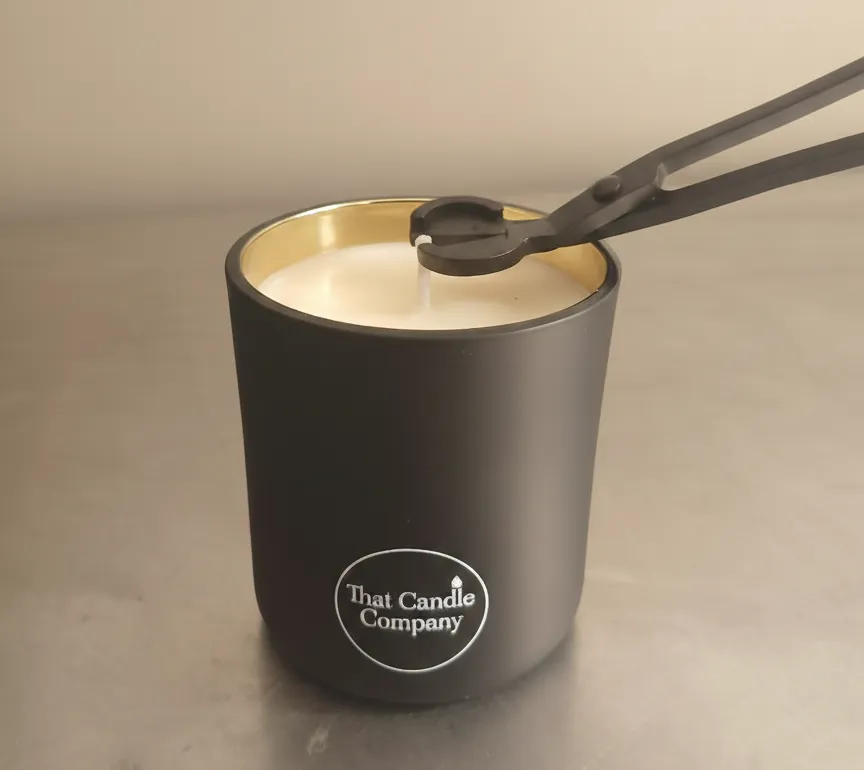
A candle’s wick plays a significant role in how cleanly it burns.
Poor-quality wicks can “mushroom,” smoke excessively, or create heavy soot. Excess soot is more likely to occur if a wick is too large for the vessel or not trimmed regularly.
High-quality cotton or paper-core wicks, properly sized for the candle, help ensure a cleaner, more even burn.
Are Cheap Imported Candles More Likely to Use These Ingredients?
Many mass-produced candles are designed to be affordable and widely accessible. To meet lower price points, manufacturers may rely on cheaper waxes such as paraffin and basic synthetic fragrance blends.
That doesn’t automatically make them unsafe — but it does mean consumers should look closely at what they’re buying.
Luxury or artisan candle brands often differentiate themselves through:
- Higher-quality wax blends
- Phthalate-free fragrance oils
- Cleaner-burning wick construction
- Greater ingredient transparency
As with most products, you tend to get what you pay for.
What Makes a Candle More Pet-Conscious?
If you share your home with dogs or cats, here are some features to look for:
1. Plant-Based Wax.
Coconut wax, soy wax, or a coconut-soy blend typically burns cooler and produces less visible soot than paraffin.
2. Phthalate-Free Fragrance Oils.
Many premium brands now clearly state this on their product pages.
3. Lead-Free Wicks.
Lead-core wicks were historically used but are now banned in the UK. Still, reputable brands confirm their wicks are cotton or paper-based.
4. Clean Burn Performance.
A well-made candle should produce minimal smoke when burned correctly.
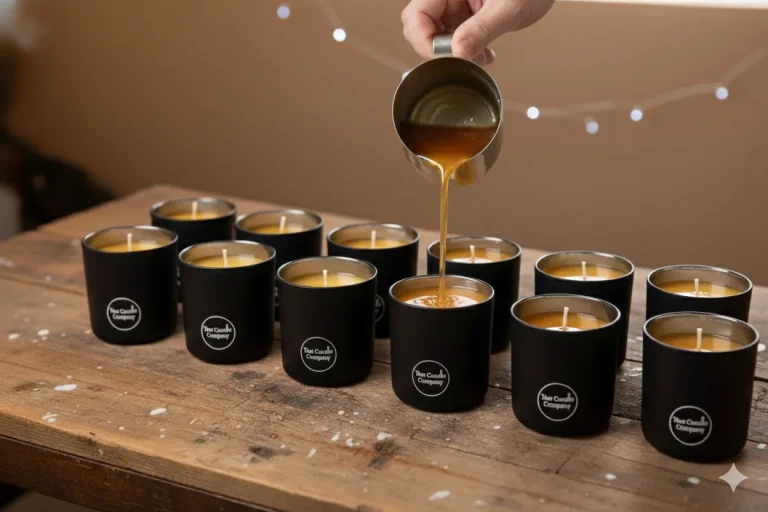
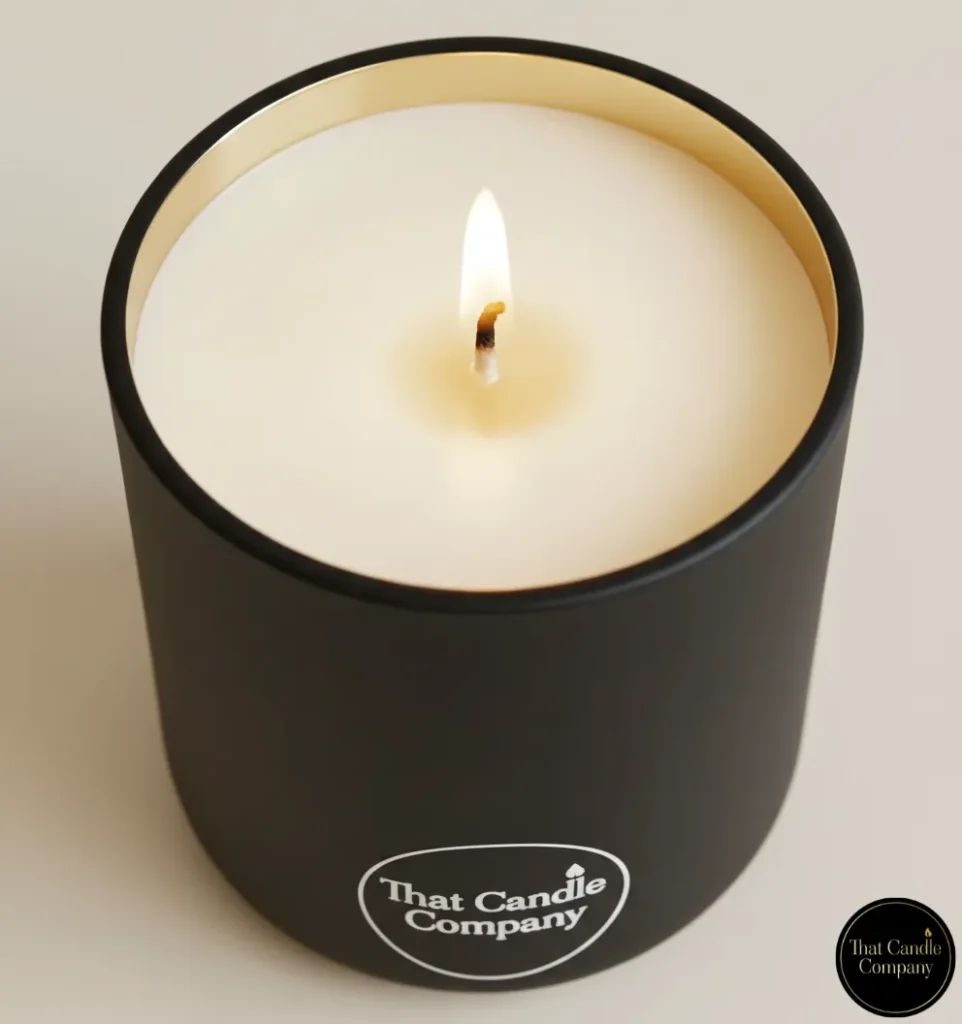
At That Candle Company, we use a high-quality coconut and soy wax blend combined with carefully selected fragrance oils, designed to deliver a strong scent while maintaining a clean, even burn.
Practical Tips for Burning Candles Safely Around Pets.
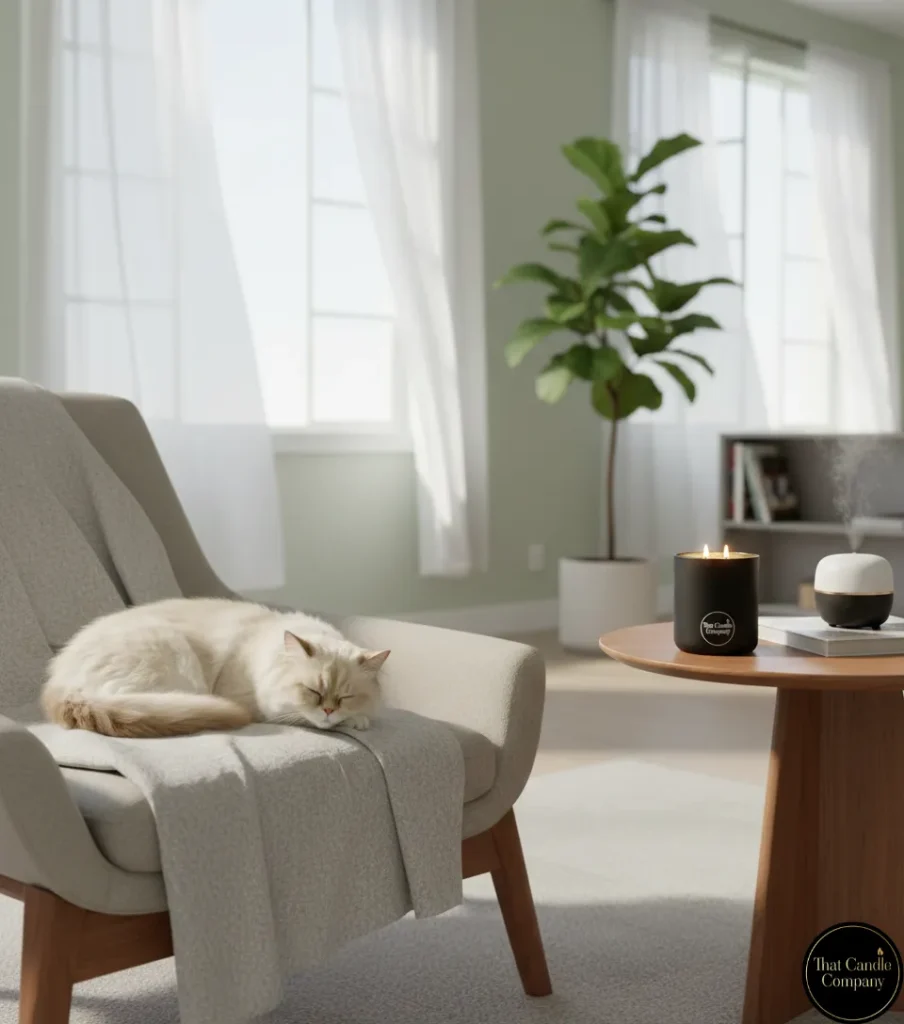
Even the highest-quality candle should be used responsibly. Here are simple precautions every pet owner can follow:
✔ Burn in a Well-Ventilated Room
Always allow fresh air circulation. Open a window slightly if possible.
✔ Keep Candles Out of Reach
Curious tails and paws can easily knock over a flame.
✔ Trim the Wick to 5mm Before Each Burn
This reduces soot and promotes a steady flame.
✔ Avoid Burning for Extended Periods
3–4 hours at a time is generally recommended.
✔ Monitor Your Pet’s Behaviour
If your pet seems uncomfortable, extinguish the candle and increase ventilation.
These small habits make a noticeable difference to indoor air quality.
Signs Your Pet May Be Sensitive
Every animal is different. While most pets tolerate occasional candle use without issue, some may be more sensitive.
Possible signs of irritation include:
- Persistent sneezing
- Watery eyes
- Coughing
- Unusual lethargy in enclosed spaces
If you notice ongoing symptoms, consult your vet for personalised advice.
The Rise of Pet-Conscious Home Fragrance in the UK
Consumer awareness around ingredients has grown dramatically in recent years. Just as shoppers now check skincare labels, many are starting to examine what goes into their home fragrance products.
We’re seeing increased interest in:
- Vegan candles
- Plant-based wax blends
- Phthalate-free fragrance
- Non-toxic home living
- Sustainable luxury goods
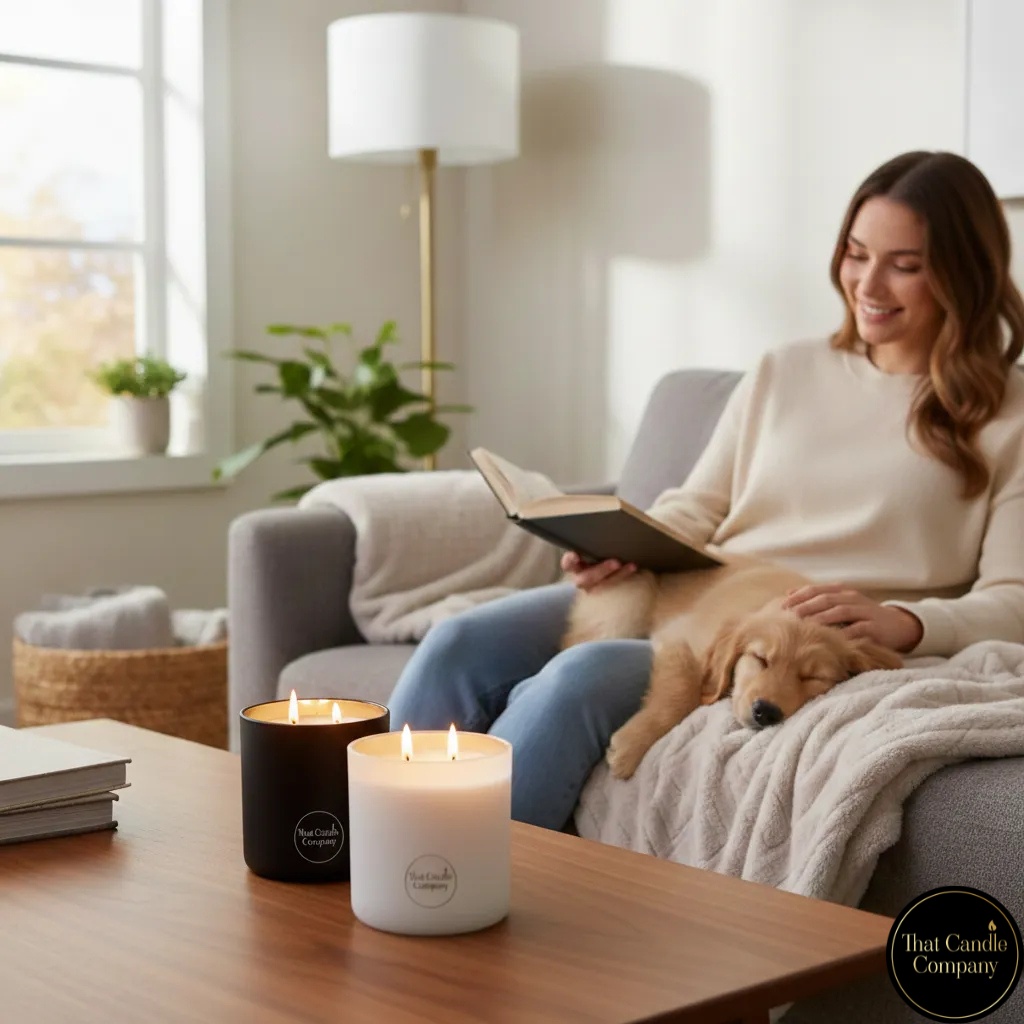
For many households, pets are family members. It’s only natural that purchasing decisions reflect that.
So, Are Candles Safe for Dogs and Cats?
For most healthy pets, burning a high-quality candle occasionally in a ventilated room is unlikely to cause harm.
The key factors are:
- Ingredient quality
- Burn habits
- Ventilation
- Transparency from the brand
Rather than avoiding candles entirely, informed choices allow you to enjoy home fragrance more confidently.
Luxury doesn’t need to mean compromise. With thoughtful formulation and responsible use, you can create a beautifully scented home while keeping your pets’ wellbeing front of mind.
At That Candle Company, we believe peace of mind should be part of the experience — for both you and your four-legged companions.